
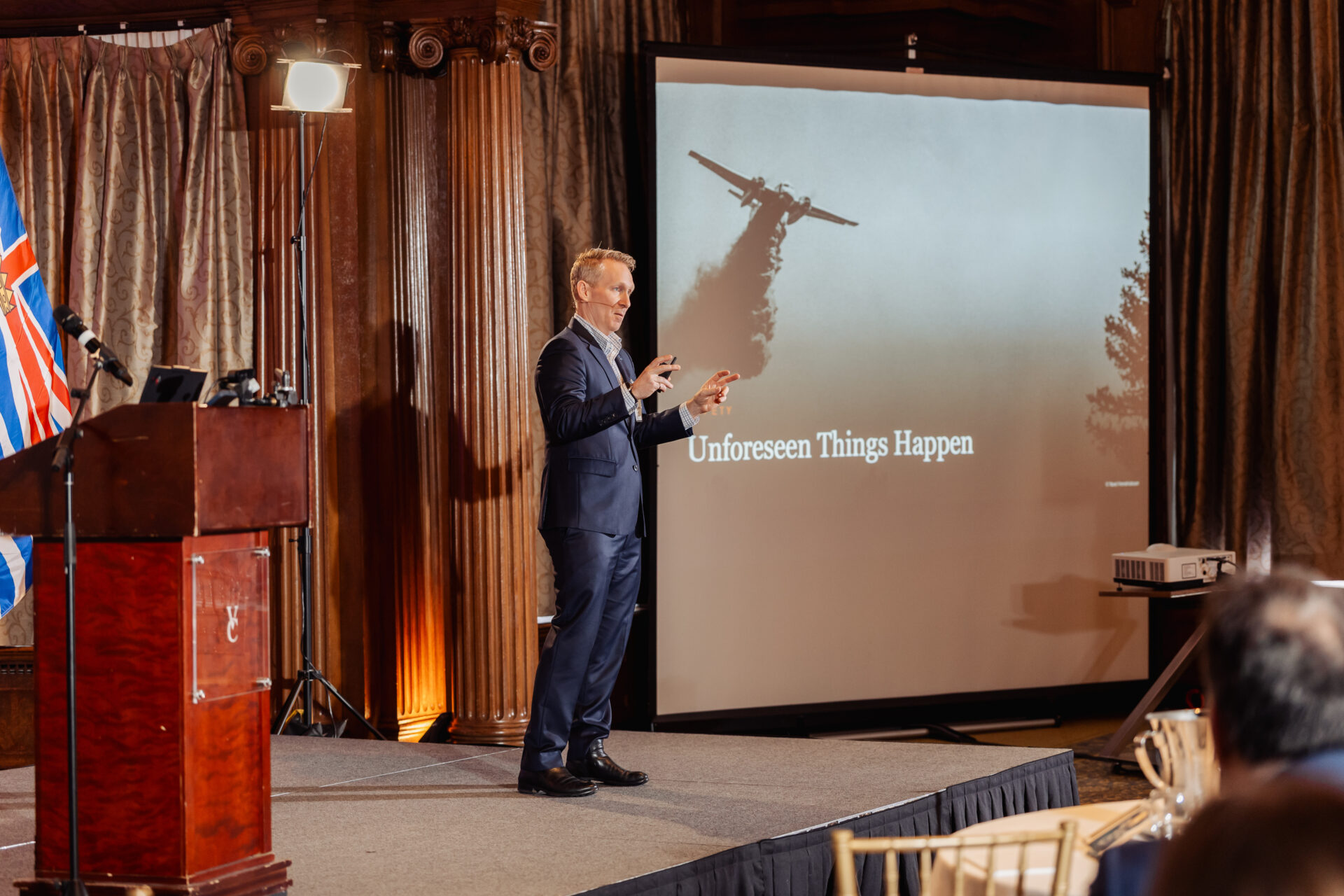
The 2026 BC Safety Charter Round Table, presented by the Executive Health & Safety Council of BC (EHSCBC), brought leaders from across British Columbia together to share experiences, strengthen safety culture and explore how organizations can better protect their people.
Among this year’s speakers was Michael Wrinch, CEO of Hedgehog Technologies, who drew on an experience from long before his career in engineering.
Michael spent five seasons with the BC Forest Service beginning at age 19. In his presentation, The Rules Were Written for a Different Fire, he looked back at wildfire fighting 30 years ago, how the job has changed today, and what that evolution can teach leaders about safety, training and adapting to change.
When the Plan Changes
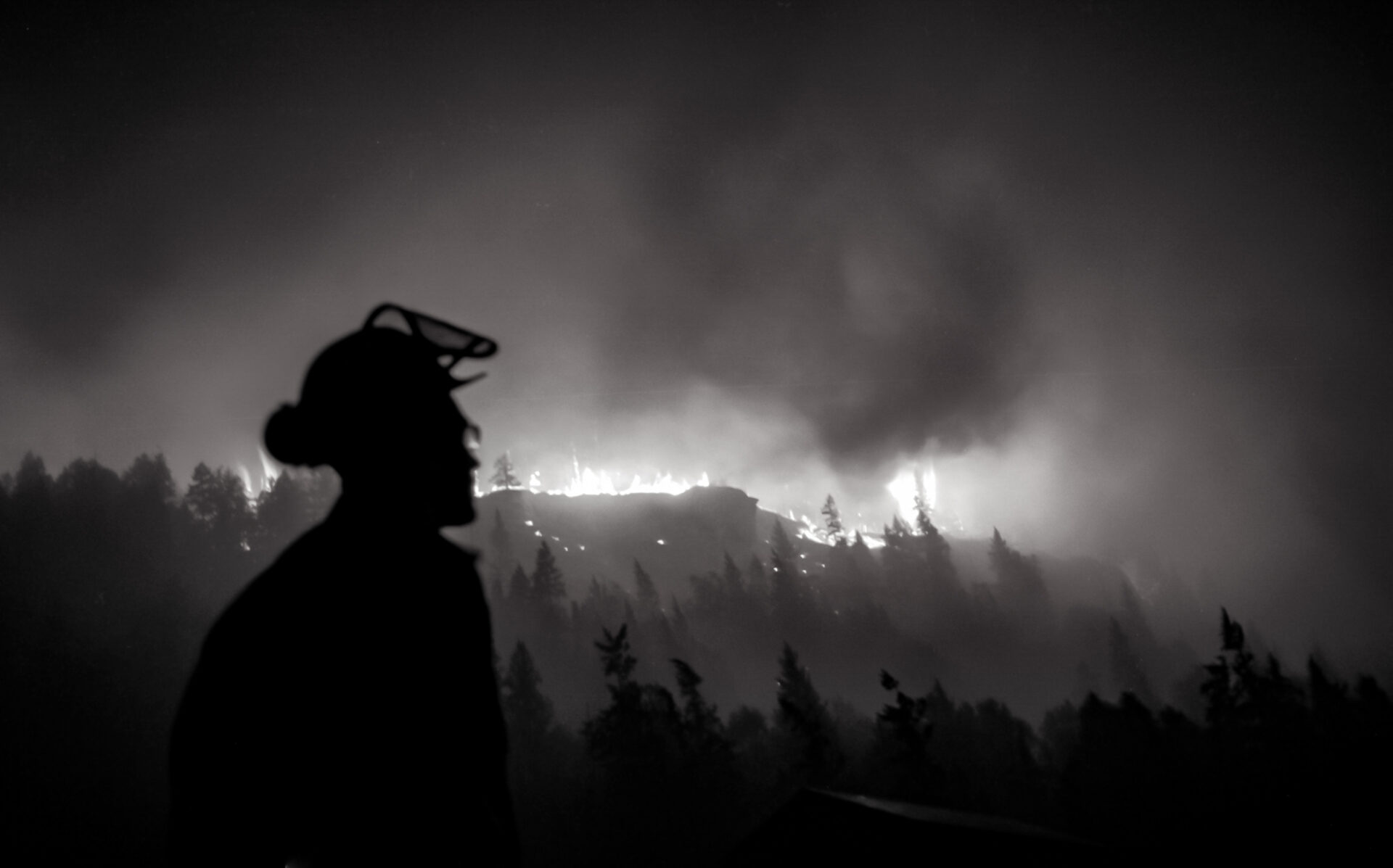
In the 1990s, wildfire response followed a relatively straightforward strategy: detect the fire, contain it and achieve 100 per cent mop-up.
Crews were trained around clear safety principles, including one simple rule:
If in doubt, get out.
Michael experienced the importance of that principle firsthand during a fire near Penticton. His crew was conducting a controlled burn when the wind changed. Embers moved overhead, visibility collapsed and helicopters stopped dropping water.
Three planned escape routes became one.
The crew dropped their equipment and ran for the remaining helipad.
What helped get them out safely was preparation: multiple escape routes, a trained and unified team, and a shared understanding that when conditions changed, nobody would argue about getting out.
Thirty Years Later, the Fire Is Different

Wildfire fighting has changed dramatically over the past three decades.
Michael’s presentation contrasted approximately 30,000 hectares burned annually in the 1990s with roughly one million hectares annually in the 2020s.
Today’s crews face longer seasons, larger fires, structure protection, evacuations, night operations and responsibilities that were not part of the same job 30 years ago.
The strategy has had to evolve with the conditions.
BC’s approach has shifted from focusing primarily on putting every fire out quickly toward managing risk across the landscape, protecting communities and using tools such as predictive services, satellites, cameras and modelling to support decisions.
Michael summarized the shift with one line:
The rules were not wrong. They were written for a different fire.
A Lesson for Every Leader

That message extends far beyond wildfire management.
Organizations build procedures and safety systems around the conditions they know. But workforces change. Technology changes. Hazards change. The way people communicate and work together changes.
Strong leadership means recognizing when the environment has moved faster than the systems designed to manage it.
It also means empowering people to speak up.
Another principle Michael brought from the fire line was:
One no is a no go.
Training, preparation, trust and leadership remain just as important today as they were 30 years ago, even when the strategies surrounding them need to evolve.
Michael left the leaders in the room with a question worth asking in any organization:
Which of your rules were written for a different fire?

 Michael Wrinch at EHSCBC 2026: Wildfire Safety LeadershipSeptember 28, 2026 - 10:29 am
- Opening Our Doors to Future EngineersJuly 29, 2026 - 10:51 am
- Michael Wrinch Recognized with EHRC’s Agent of Change AwardMay 19, 2026 - 12:27 pm
- Hedgehog Technologies Takes Home ACEC-BC Award of ExcellenceMay 11, 2026 - 9:30 am


