
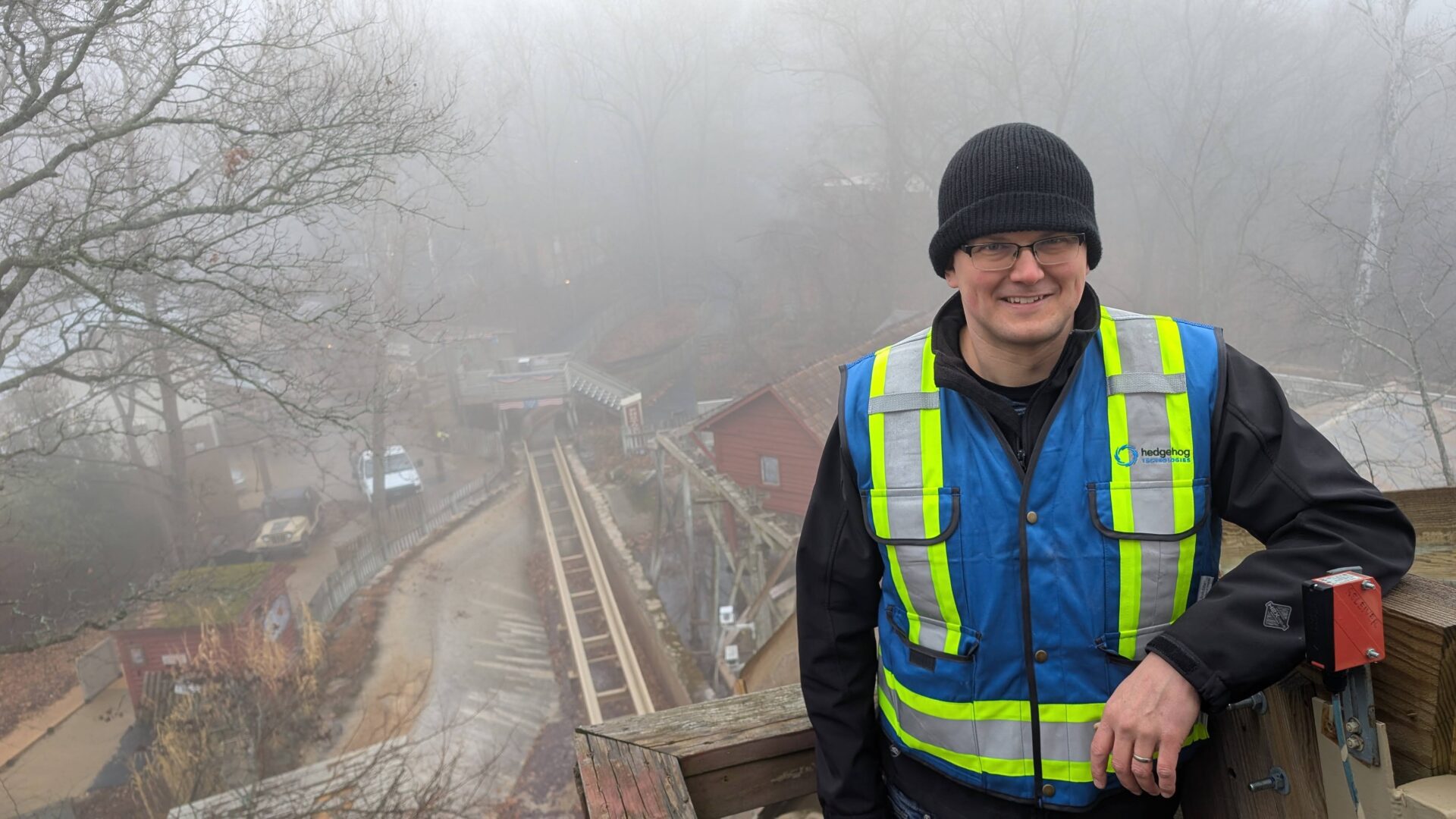
Art isn’t created in a vacuum, and neither are good designs. As a senior engineer, I’m often drawn to solving specific problems with solutions that have already proven themselves in the field. The sneaky bit that’s gotten me in trouble in the past is whether the solution works with THIS set of circumstances. For example, I can design the best, most efficient ROV track drive system that can drive up mountains but if it keeps sinking into beach sand because it’s too heavy, what good is it?
“Well, duh,” you say. “That’s a table-stakes design check.” And I would agree if I hadn’t seen such simple design mistakes wiggle their way into the real world time and time again, often at a large scale.
For instance, a number of years back, a company hired me to be the engineering lead on a state-of-the-art roller coaster that employed some of the smartest ride control and structural engineers I’ve ever met. We were designing a multi-launch coaster with a new type of launch system. The controls team, vehicle team, and track team all knew that a critical gap had to be maintained between the vehicle and track-mounted sensors. Each team knew where they needed to place the sensors on the launch track, knew the critical gap specification, did their checks independently, and verified their own work. Everyone checked it using assumptions they had of the other disciplines and then proceeded with the launch and track design.
All good, right? Wrong. No one actually calculated the chording effects, which is the way the underside of a vehicle moves closer and farther away from a track as it travels through curves. The track team thought the vehicle team took care of it, meanwhile the vehicle team thought the track team took care of it. No one was looking closely enough at how the whole system behaved under the actual operating conditions. The problem was not a lack of talent or effort, it was that the engineering was done in a vacuum.
The lesson? A company’s culture and processes should be integrated around being able to catch mistakes like those.
Be curious. Ask questions. Seek clarity. Challenge assumptions from other disciplines. Dig until risks, requirements, and edge cases are crystal clear within the group. Do you know that your subsystems will integrate in a way you expect? Is your design over-constrained? Under-constrained? Do you know your system’s limitations? Does the stack-up exceed your limits? Did you put straight launch equipment on a curved track?
Good designs can look like art, but neither is created in a vacuum.
Stay connected with Hedgehog Technologies: on LinkedIn.
 Engineering in a Vacuum: The Hidden Cost of SilosMarch 17, 2026 - 8:39 am
- Hedgehog Technologies Welcomes Dr. Andreas Huster as PartnerJanuary 27, 2026 - 8:55 am
- Reflections from the APTA Safety and Risk Seminar in San DiegoDecember 11, 2025 - 11:12 am
- Raising the Bar on Ride Safety: Hedgehog’s Contribution to the New ASTM F3598 StandardNovember 26, 2025 - 11:28 am
- Engineering with Purpose: Reflections from the UBC & EGBC Networking EventNovember 7, 2025 - 7:39 am


